
Home for the holidays part 1
Heading into the holiday season I wanted to take a moment to help you prepare to minimize the stress and potential for dangerous incidents for your dogs!
The holiday season is often a time when we combine very busy households, access to foods, more people and possibly other pets that can lead to conflict or accidents. Taking some time to make a plan for how you bring you pups safely through these events can make a huge difference. So let’s talk about some of the considerations.
Food for thought:
Digestive upsets, pancreatitis, stealing your food, resource guarding, toxic ingredients, etc…
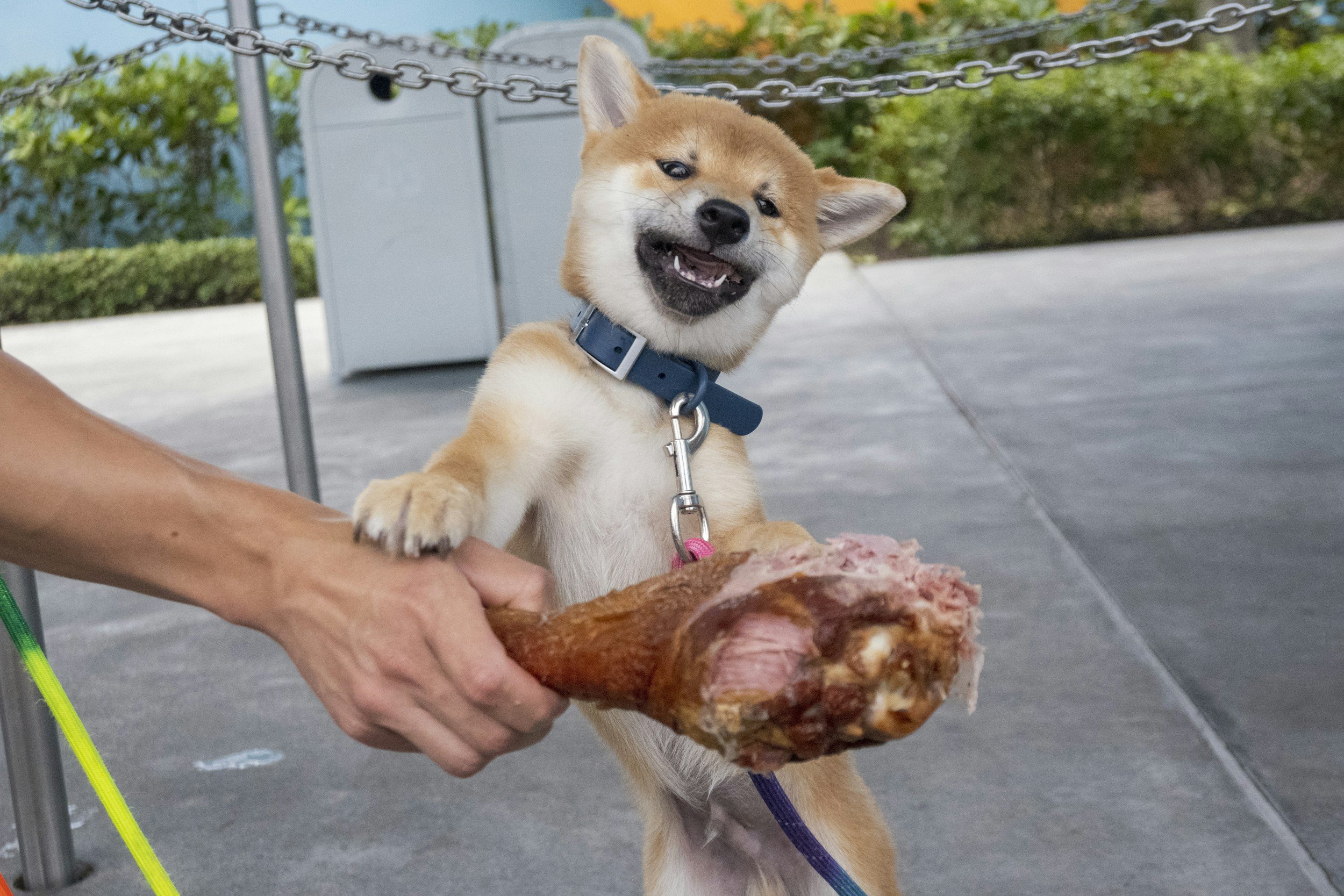
The holidays are a very busy time for our emergency veterinary community as they help pets who have become ill after ingesting foods they shouldn't have. Whether it’s getting into the trash and eating sharp bones, stealing boxes of chocolate or a bout of pancreatitis from being given too much rich fatty food. So familiarize yourself with common ingredients that are toxic for dogs: chocolate, onions, xylitol, etc (google it, there are many easy to access lists you can print out and have handy) and keep animal poison control number handy! The ASPCA in the states operates a poison control hotline for pets. They do charge you for a consultation, but in my opinion it is well worth it. They are able to get information about your pet, their size, age, breed, etc and calculate their risks given how much they have ingested, they have suggestions on what to expect and when to seek immediate care. In fact many veterinarians here will tell you to call them and get that information first as they have faster access to product resources than many vet clinics will have readily on hand.
Keep all treats and holiday foods out of reach of your pets!
Check for toxic ingredients! Even small amounts of things like xylitol can be deadly.
Instruct visitors not to feed your pets any people food, have dog safe treats available for them to give.
Use baby gates or other physical means to keep your pets safe when you can’t supervise.
The holidays are often a time when dogs who have never counter surfed before discover it!
ASPCA poison control hotline: 888-426-4435
Many things can happen, but let’s look at some of the most common holiday veterinary issues that happen with pets in addition to eating toxic ingredients.
Pancreatitis
Feeding your dog too much fatty food can cause pancreatitis, when they pancreas becomes inflammed. Pancreatitis can range from mild symptoms to a life threatening condition. Symptoms can include: loss of appetite, vomiting, abdominal pain (which often goes unnoticed unless severe, but repeated stretching like a play bow is often a clue), lethargy, fever, changes to their 💩. It doesn't always take a lot of a rich food to set off pancreatitis and dogs who have always been fine getting to try the tasty rich holiday foods can develop pancreatitis at any age.
So if you really need to share leftovers with your dogs be careful what you give them and keep it to very small amounts of the lower fat dog safe options!
Instruct visitors and family members NOT to feed your pet people food! Have some dog safe treats they can offer instead.
Use baby gates or secure your dog during times food is out and you cannot supervise. Holidays are often a time when dogs who have never counter surfed before discover it!
If your dog is experiencing symptoms of pancreatitis contact you veterinarian!
Gastroenteritis
Eating foods they are not used to can also cause gastroenteritis, an inflammation of the stomach and intestines. Symptoms are very similar to pancreatitis, with sudden onset severe diarrhea being the most urgent and noticeable symptom that sends most pups to the vet. Again symptoms can range from mild to severe. Raiding the trash is one of the most common set ups for this during the holidays!
Keep your trash cans secure and out of reach of your pets!
Instruct visitors and family members NOT to feed your pet people food! Have some dog safe treats they can offer instead.
Use baby gates or secure your dog during times food is out and you cannot supervise. Holidays are often a time when dogs who have never counter surfed before discover it!
If your dog is experiencing symptoms of Gastroenteritis contact your veterinarian!
Bowel obstructions
When your dog ingests things difficult to digest those things can become lodged in their intestinal tract preventing things from being able to pass through to their bowels. Bowel obstructions can be a life threatening occurrence. Symptoms can include: vomiting, abdominal pain (again that stretching like a bow can indicate pain), lethargy, bloating, excessive drooling or dry mouth and straining to eliminate. Once again raiding the trash is often a classic set up, they eat turkey bones, the string that was around meats, foil and paper towels with meat drippings and things get jammed up causing a blockage.
Keep your trash cans secure and out of reach of your pets! Don’t feed your pets cooked bones!
Use baby gates or secure your dog during times food is out and you cannot supervise. Holidays are often a time when dogs who have never counter surfed before discover it!
If your dog is experiencing symptoms of an obstruction contact your veterinarian!
The takeaway message is:
Don’t assume your dog will not try to get into the trash or counter surf just because they never have, use baby gates or other physical means to keep them away from foods they should not have. Instruct your guests not to feed your dog, unless it is dog safe treats you provide them. My dogs have excellent leave it skills and don’t counter surf, but during holiday dinners I just have them take a nap on their beds behind a baby gate so I do not have to worry.
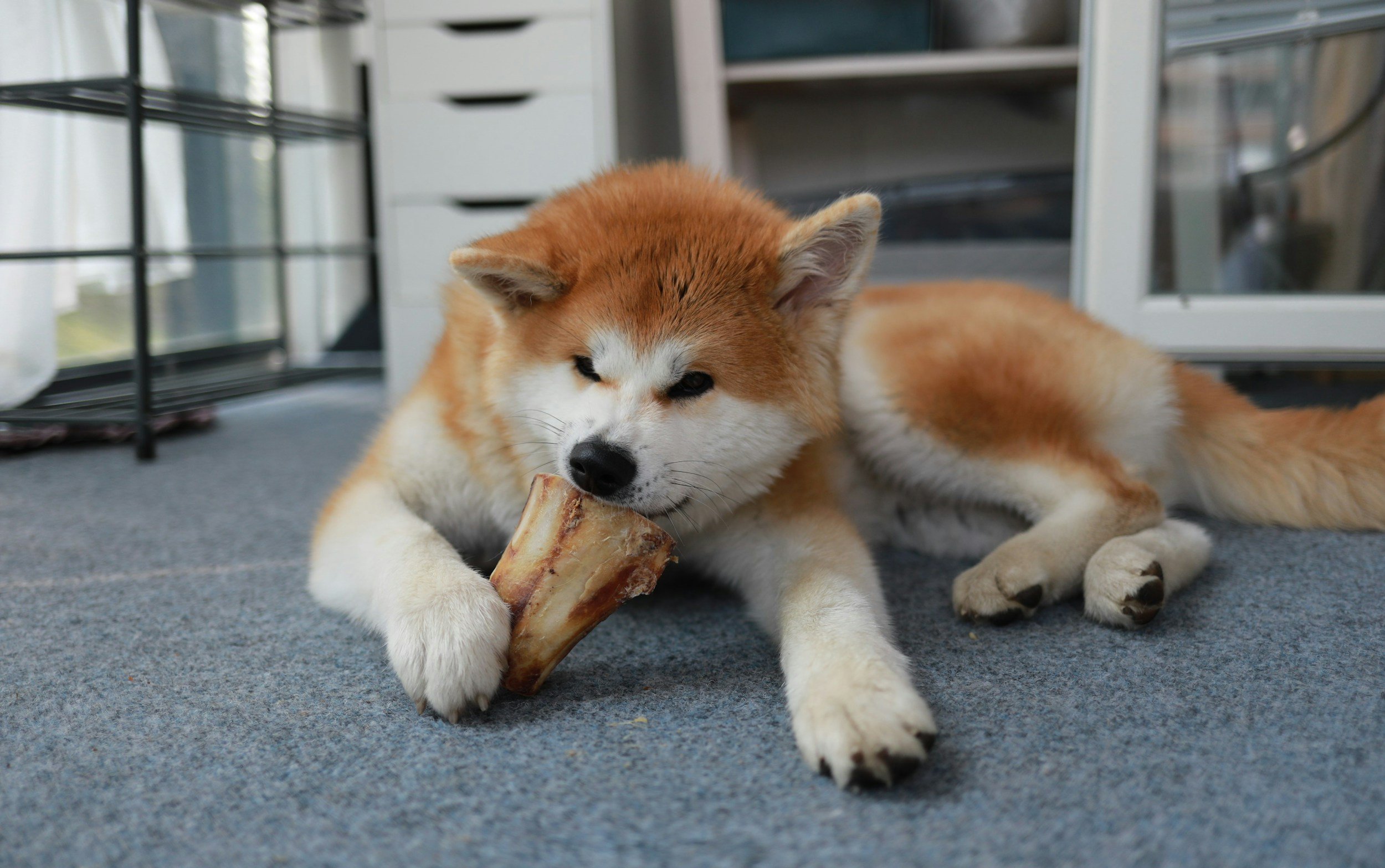
Resource Guarding:
Many family gatherings also include other family pets being invited or young children your dog is not accustomed to sharing spaces around resources with which can lead to scary aggressive incidents. Having clear boundaries for everyone can go a long way to helping dogs cope with these changes.
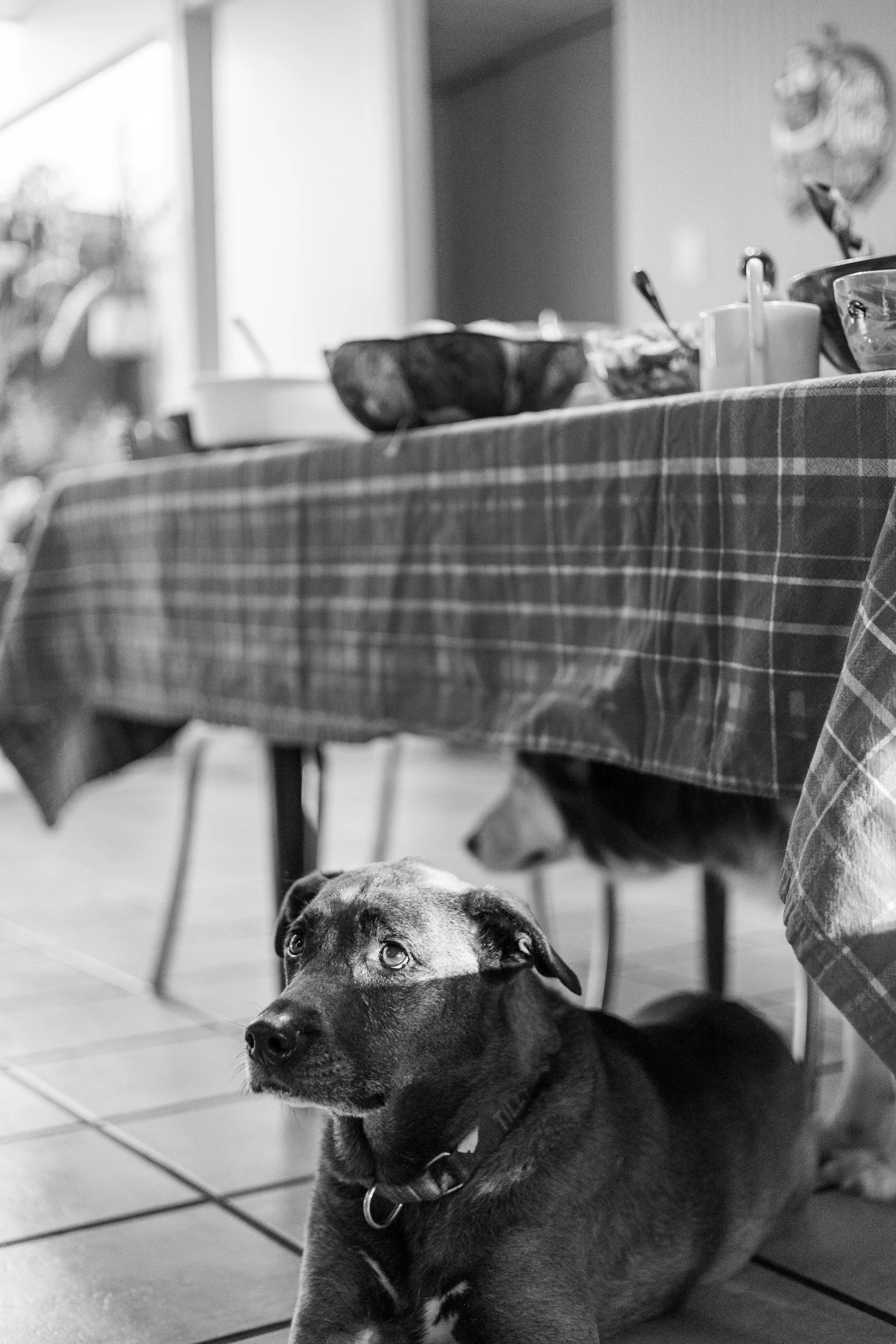
Visiting dogs: we will talk more about this in a moment, but for the sake of preventing resource guarding have clear rules about where the dogs are when people have food. Dogs that don’t live in the same house (and sometimes even in that case) being able to be under the table where food might be dropping or even just the idea that could happen, combined with not being able to see them is a recipe for disaster! NO dogs under the table during the meal can make things much safer. Having someone responsible for watching the dogs so they can see early signs of trouble and can implement management to keep the peace. Putting away bones, favorite toys and favorite beds can prevent conflict. Crates, baby gates, exercise pens and/or leashes are great tools to keep the peace using management to prevent conflict.
Visiting children: while many dogs love children, that doesn’t mean they are ok with a child around their valued resources! Follow the above suggestions as well as having “kid free” zones where the children have been instructed they are not to interact with the dog. Having a safe space the dog can go and not have a child approach can give them a way to move away to avoid conflict. Children are not aware of how dogs try to tell them to move away and easily miss guarding body language so physical separation is the safest option and interactions should always be supervised! When feeding your dog with visiting children the safest option is to have your dog eat in another room with a closed door unless you are directly supervising and have yourself between the dog and child. It is also good to have dog beds, water bowls, etc in places that are not in a corner so the dog can easily move away if the child approaches.
An ounce of prevention is worth a pound of cure.
As we head into the holidays we should have a clear plan of how we:
prevent our dogs from gaining access to things they should not eat
how we prevent visitors from giving our dogs things they should not eat
how we keep our dogs comfortable around other pets/children with food, toys, beds, etc
know what things are dangerous for our dogs to ingest
know what signs to look out for incase they were given things to eat we were not made aware of
know how to reach a veterinarian during holiday hours