
Click!
Interested in learning more about clicker training? This weekend’s live we will look at the basics and principles of using a clicker (reward marker) to shape behavior.
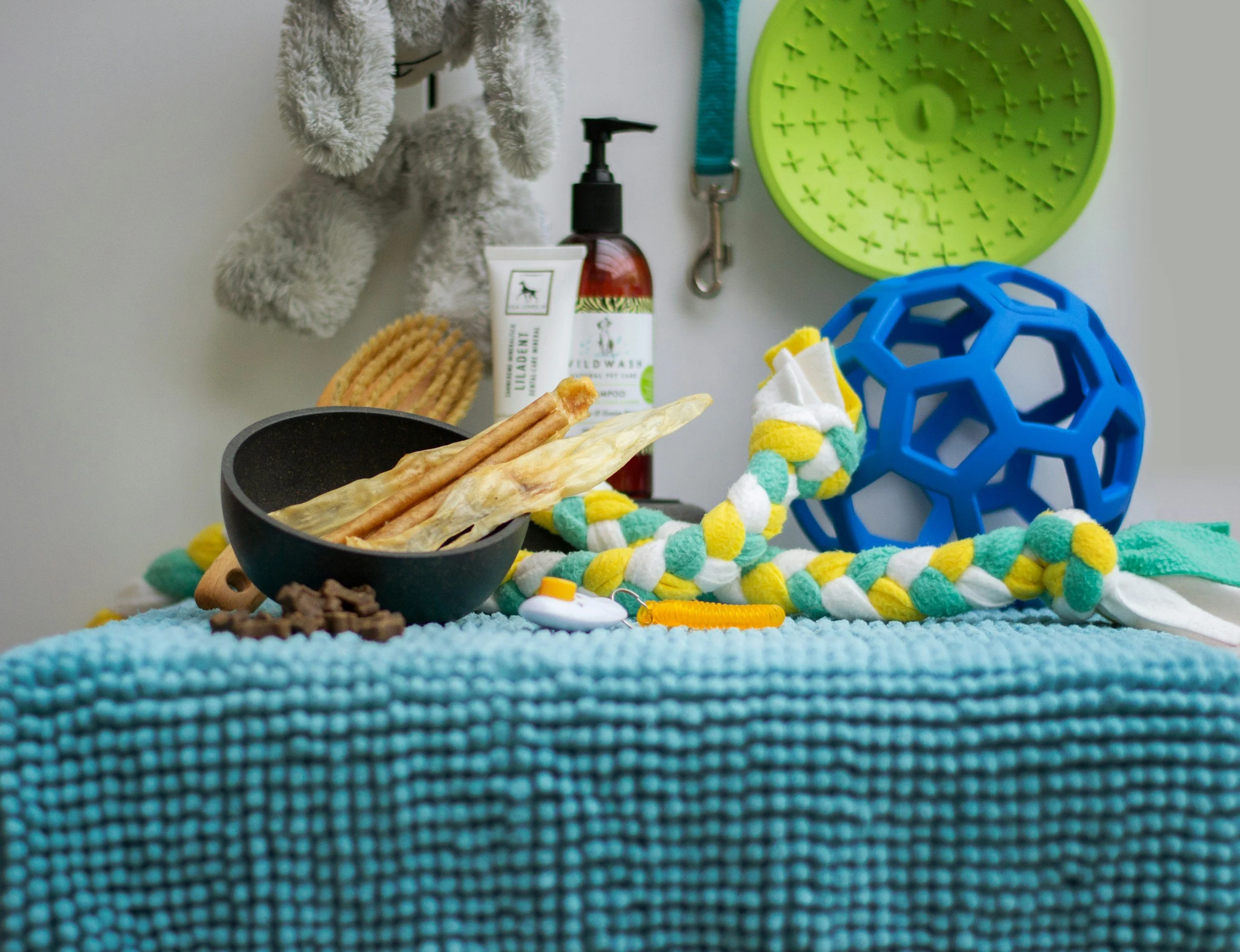
What is shaping? Have you ever played the “hot & cold” game, the child’s game where you decide without telling someone, what you want them to do, approach. touch, etc and you only can guide them by saying “hot” if they are getting closer or “cold” if they are getting further away? Behavior shaping is essentially this game, we use a clicker and a reward to say “hot” and our lack of click means “cold”.
Shaping is taking behaviors our dog throws and using reinforcement to take those behaviors and bring the dog closer and closer to an end goal of a behavior.
Why use shaping? While it is not a skill that all dogs find easy or fun, for so many dogs this is a way to:
build confidence
build problem solving skills
mental enrichment
mental & physical exercise
build your observational skills and training mechanics
build complex behavior chains
For more information there is an entire course: Foundations for clicker training.
I do not use a clicker or shaping to teach every skill, but I do use it quite a bit with all of my dogs.
Common questions:
Q: Do I have to use a clicker?
A: No, you can also use a verbal marker like “Yes”, however, sometimes a dog has a stronger response to a neutral stimulus that is then conditioned to only = reinforcement. Our dogs have extensive experience with our voices and tones and our emotions can deliver different information depending on our feelings. For example I know my dogs understand the difference between my excited OMG “yay” response I have vs my “yes” everyday mark. Having a difference depending on how you feel can influence how the mark is received. But that little plastic box that always has the same noise and always = a reward can be less erratic and thus more clear to read.
Q: How long do I need to use the clicker? Will I always need it?
A: You only need the clicker during the capturing stage, once your dog understands the basics of the behavior you can use your voice and normal praise to mark the behaviors. The clicker is to help catch those precise moments when your dog makes a decision so you can more easily and precisely catch those “hot” moments. That being said there is nothing wrong with keeping using it! I just find it easier to eliminate the extra thing in my hand and move to my voice.
Q: Can I use a toy as a reward instead of food when shaping behavior with a clicker?
A: Yes! If your dog prefers a toy over food you can use a toy after the click. That being said you want to think about the specific skill you are teaching and whether or not the energy of play helps your training or slows it down. Also, the time it takes to reward with the toy can greatly reduce the number of repetitions you can get in a session as it takes time for your dog to get the toy, let go of the toy and remember what they were doing before they started playing. So in general if I am teaching behaviors that require a calmer more focused dog I will start with food and then move to toys once they have a concept of what the behavior is.
Q: What if my dog is afraid of the clicker?
A: Use a marker word, or another sound, for example a softer click like a pen, you can even make a click sound with your tongue. I would work on desensitizing the clicker so they might someday find it fun, but I would start with a sound they are not afraid of. When introducing a clicker it can help to put it in your pocket, or even cover it with a sock to soften the sound as you introduce it before you know if they are going to be worried about it. If your dog tends to be wary of new noises I would definitely introduce it muffled like that, also clickers can range wildly in their volume so when buying one select for a softer click if you have a sensitive dog.
Beginners vs Experienced- what is it that sets people apart that are good at shaping behavior?
Don’t be afraid to click more things. Getting your dog offering behaviors and finding it a highly reinforcing game creates dogs that more readily offer new behaviors. So don’t get stuck waiting for perfection. The general rule of thumb is, just don’t click the same thing more than 3 times in row if it is not what you ultimately want. But you can click a time or two for effort even if they offer the wrong thing, offering anything at all is better than nothing, so don’t be afraid to make a mistake. The more experienced someone is, the more smaller steps in a behavior they can spot and reinforce for!
Understanding where and how you deliver the food matters.
Is it an active behavior where you want the dog standing or moving? Toss your rewards to keep them moving between reps.
Is it a stationary behavior where you want the dog’s body staying in one place? Deliver your treats calmly and deliberately as close to where you want the dog’s head to be while doing the behavior.
Mood and energy is as important as each specific step, so if you want calm behaviors, work on calm before the specific skill. If you want energetic responses, get them excited and energized before training.
Tips for getting started:
Condition your clicker (see videos in the Foundations for clicker training course)
When you start shaping there are a few styles we can choose from:
Free shaping: we have no idea what we want to capture, we just let the dog offer something and see where we can get with that session.
Behavior shaping: we have a specific behavior in mind, list out as many of the steps to that behavior and start with capturing the closest behaviors the dog offers to things on our list of steps and see if we can “hot” our way to a behavior.
Using Props that provide clues. Having a prop that has some more obvious choices of what to offer. Like a cone we can shape them to go around, a target we can shape them to touch, a box we can shape them to get in, etc. Having “a thing” can be one of the easier ways to get started. That being said, sometimes that prop can also set us up to have expectations which can make us less freely giving of reinforcement.
Not all clicker training is behavior shaping, we can also just use a clicker to mark and reward behaviors we prompt. So we can say “sit”, the dog sits, we click and give a treat. Sometimes this is a nice way to get comfortable using your clicker and treats as you are first learning.
When shaping and using a prop: do not set the prop down until you are READY to start clicking and rewarding! Those first moments are the moments your dog is most likely to offer a behavior and if you miss it, they might lose interest and disengage while you are fiddling around getting ready, so have your clicker in your hand and treats ready to give before you set that thing down. Anytime you need more time to get situated you can toss some treats for your dog to go find while you get situated.
It can really help to have a beginning and ending station to clean up your sessions. For example I can have a snuffle mat, a raised bed, a crate… I have my dog start there, when I am ready I invite them into the shaping session, then when I am done I guide them back to that spot to signal we are done.
3 Games we will play in class:
1) The Box Game:
See the Clicker Foundation course for video examples and more details. We will take a cardboard box and see what behaviors we can get. Can we get the dog offering to step in without us luring at all? Maybe they can circle it? Push it their nose?
2) Hot Object Game:
See the Clicker Foundations course for more details and demos. This game is a very low pressure way to start getting your dog interacting with objects and to understand the concept one might hold more significance.
3) Target Training:
See the Clicker Foundations for more details and demos. Teaching our dogs to move to and touch a target with either their paw or nose.
4) Free Shaping:
Let’s see where they take us when we ask for nothing at all as we hold a clicker and treats.
5) Trouble Shooting
Have behaviors you are trying to shape but as stuck on and want some help?
Join us for live training:
Topic: Shaping with a Clicker
Time: Jul 26, 2025 08:30 AM Pacific Time (US and Canada)
Join Zoom Meeting
https://us06web.zoom.us/j/81743102044?pwd=ekx9rZDZp0Ub2ssO3hM5crnyYcEqaN.1
Meeting ID: 817 4310 2044
Passcode: 957663