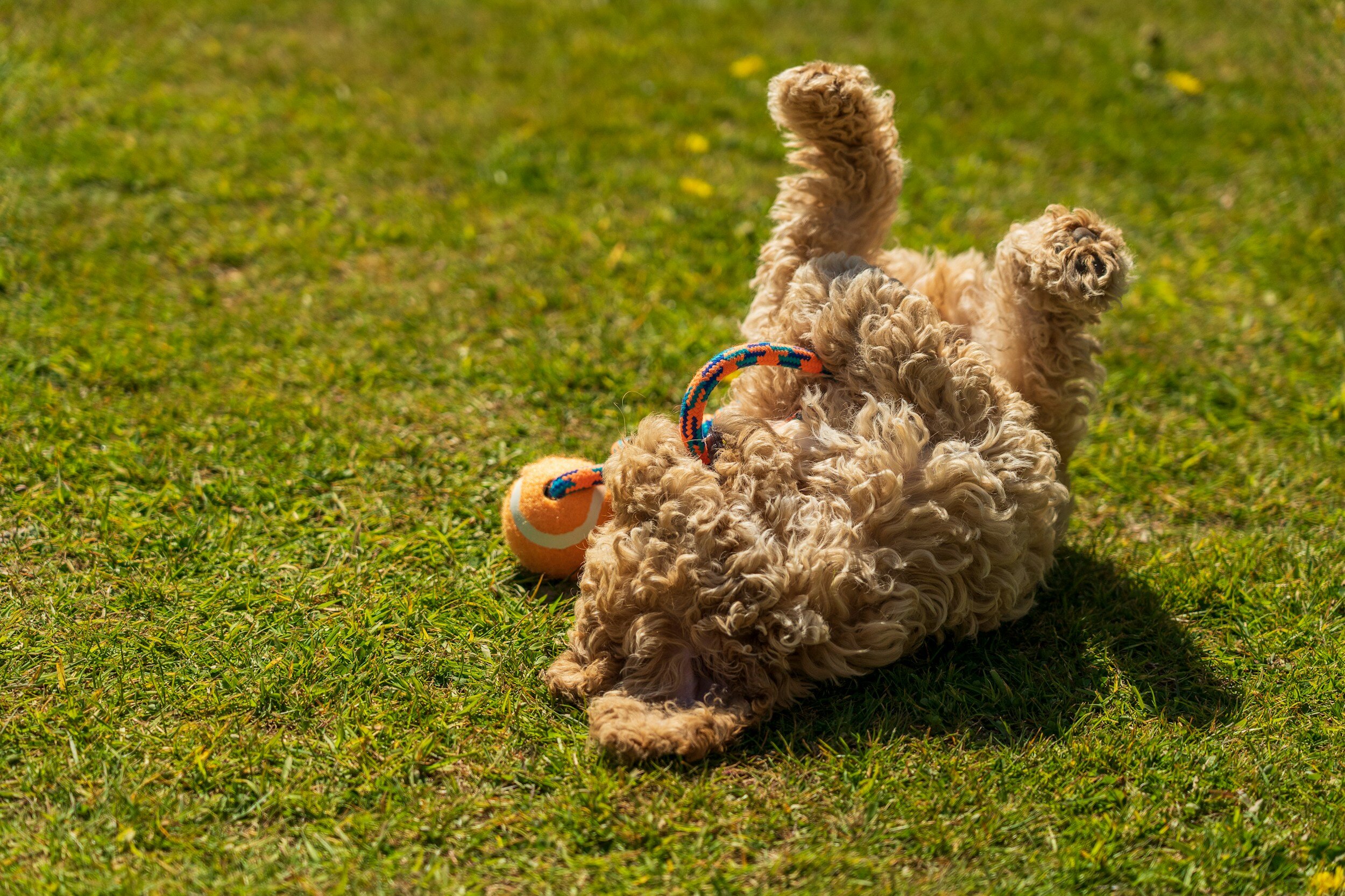
Got Game?
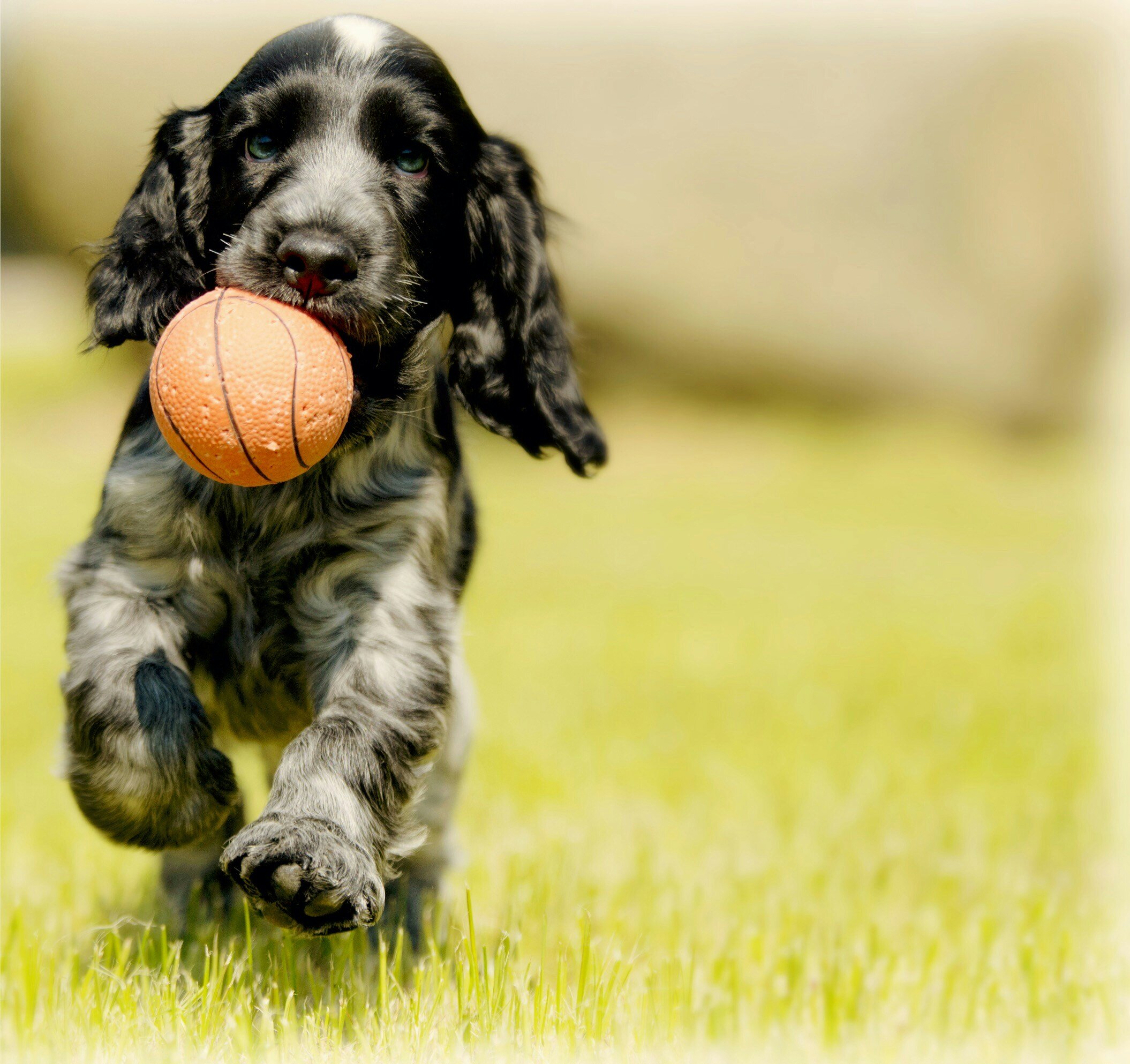
Why am I so obsessed with getting people and dogs playing?
Play is one of the most under utilized positive reinforcement strategies and yet it is one of the most powerful ones. As I type this Julia and Leo are literally running laps around my livingroom coffee table playing with each other. For young dogs especially play is an essential need, and if you don’t meet that need they will find their own ways to meet that need for example; “playing” with your irrigation drip lines, or “playing” with your socks and underwear pulling you into a nice game of chase and keep away, or “playing” with your pant legs and shoe laces as you try to walk them outside to go potty. They WILL play, if it’s not with you it might be with that dog and person they see across the park that they are racing towards as you shout their name helplessly. The need for play is hardwired into the DNA of most living beings. It is how they “rehearse” the skills needed in life, and in their cases needed for life as a predator and scavenger. People often have the idea that play equals fetch, which is a favorite game for many dogs as it elicits the natural drives to chase down their prey and grab it, and it is usually the favorite game for humans as it’s a fast way to exercise and tire out a dog. But many dogs are not natural to fetch, they might enjoy chasing it, but not enjoy bringing it back or having it taken from them. So we have to experiment to find the ways our dogs like to play and that can take some time and a lot of experimentation, but that is play at it’s core, experimentation.
Reasons why I prioritize play:
Provides a dog/puppy with physical, mental and social enrichment and exercise
Strengthens bonds while building cooperation & communication.
Strengthens your reinforcement strategies
Can be vital in predation subsitute training
Teaches me about my dog’s motivation, arousal levels, frustration tolerances and gives me more information about them and how they approach life
Builds confidence and problem solving skills
Reasons we might struggle with play:
Humans often spend a lot of time suppressing a dog’s desire to play, often unknowingly. Each time they bite our hands when they are puppies we often scold them, when this is a puppy trying to play with you. They run over and jump on us to engage with us and we tell them to get off and ignore them
Our dog/puppy might come to us already having been scolded for trying to play and therefore can be apprehensive about engaging with us when we offer, worried they will be scolded if they engage
We might be putting too much pressure on our play and therefore making it more like a job than play, which takes the fun out of it for us both
We might be too assertive in our play and our dogs might refrain from joining in, reading our intensity as possession
Our dogs might have physical limitations of discomfort that prevents them from enjoying play. Perhaps your puppy is teething and it is uncomfortable when you tug on the toy. Perhaps your adult dog has a broken tooth, neck or spine pain that makes being tugged on uncomfortable. If your dog has arthritis or other orthopedic issues running and chasing a ball might hurt
Age. The older dogs get, just like us, that natural energy level and drive for activity lowers. This is slower to happen in both people and dogs that CONTINUE to play throughout life.
Categories of play:
Social human play: interactive play with people, games like tug of war, fetch, frisbee, catch, wrestling, chase, etc. As mentioned above
Social dog play: interactive play with two or more dogs.
Increases a dog’s communication skills with other dogs.
Environment and other factors can affect whether this play leads to over arousal issues
Dog parks and Daycares can often involve over stimulated dogs, bullying, fearful overwhelmed dogs
Independent play: playing with toys by themselves
Great skill for when you need to attend that zoom meeting, have guests over, etc
Intraspecies play: playing with other animals that play back: cats, etc
Rules/suggestions during play:
You should BOTH be having fun. If having your 110lb dog tugging your shoulders out of joint is not fun for you, find another game;)
It should not feel like work, it can, it can be hard and frustrating when your dog doesn’t just play, but only play as long as you are having fun trying to figure it out, stop if and when you feel frustrated. They will feel those emotions so don’t bring that into your game
Consider what things you don’t want outside of play, and don’t let that come into your play. Have a dog that struggles with jumping on people? Don’t throw the ball as they are leaping up and down, wait until they sit. Don’t want your dog grabbing things from your hands? Then don’t hide the toys behind your back or hold them up high, teach them to wait until you begin the game
Watch your dog for signs of stress or over arousal and if you see that pause the play, consider working some training games with treats mixed into the play for our quick to over arouse dogs, and think about shortening your session or evaluating the play if you are seeing signs of stress
Consider your dog’s physical body! Even if they are not showing signs of stress things like: tugging with their feet of the ground, fetching where they race to a full stop and diving for a ball (hint, if you dog often trips or rolls over when grabbing a ball you need to change how you play fetch). Dogs with really high prey drive will often play beyond their phyiscal limits and injure themselves, so it is up to you to know when they are getting fatigued and stop BEFORE that. It’s up to you to know what is safe for them, they are not always the best judge when it comes to play.